Osteopathy in Canine Post-Surgery Recovery
13 Oct 2026 Canine

Click to view


As veterinary surgery becomes more sophisticated, so do the recovery challenges that follow it. A dog undergoing a tibial plateau levelling osteotomy does not simply recover from the repair of a ligament — it must adapt to altered tibial geometry, redistribute weight across a changed skeletal landscape, and manage a cascade of secondary compensations that can extend long after the wound has healed.


Melissa Baron’s thesis takes a broad and clinically grounded look at the role manual osteopathy can play in post-surgical recovery across different types of canine procedure: orthopaedic, spinal, and abdominal. Drawing on both veterinary and human research, as well as first-hand clinical observations from a Canadian veterinary practice, Baron builds a detailed picture of how osteopathic techniques address not just the surgical site but the systemic disruption that surgery invariably produces.


One of the most compelling sections of the thesis concerns secondary back pain. In dogs, roughly 60% of body weight is carried on the forelimbs; remove the function of one hind limb, even temporarily, and the resulting postural shift places abnormal load along the entire spine. Baron traces the vicious cycle that follows — prolonged compensatory stance leads to increasing muscular inflammation, which weakens the surgical leg further and extends recovery for everyone involved. Osteopathic techniques targeting the thoracolumbar junction, sacroiliac joint, and coxofemoral joint interrupted this cycle in the ten-dog clinical study described in the thesis.


The paper also explores abdominal surgery recovery, where fascial adhesions along incision lines frequently cause restriction in the iliopsoas and sartorius, reducing hip mobility and generating back pain that owners interpret as unrelated post-surgical sluggishness. A few targeted osteopathic sessions, Baron reports, often returned dogs to normal stair-climbing and furniture-jumping within weeks.


The scope here is genuinely wide — scar tissue management, gastrointestinal function, reduced reliance on post-operative analgesics, shortened hospital stays — and the argument for integrating osteopathy into standard post-surgical protocols is made with care and clinical precision.
Animal Osteopathy for Health & Mobility


Click to view


Animal osteopathy is not a single technique applied to a single problem. At its most expansive, it is a framework for understanding the body as an integrated system — one in which structure and function are inseparable, in which a stiff hip can tighten a shoulder, and in which a restriction in the stomach’s connective tissue can manifest as back pain three anatomy lessons away.


Lee Mei Ki Maggie’s thesis takes on three distinct but interconnected specialisations: osteopathic manual therapy for geriatric animals, rehabilitative osteopathy for post-surgical and post-trauma recovery, and the emerging field of visceral osteopathy. Together, they form what the author describes as a flexible and comprehensive treatment system that adapts across life stages and health challenges.


The section on geriatric care is particularly rich. As animals age, the changes go far beyond stiff joints — sarcopenia, diminished fascial elasticity, impaired lymphatic drainage, and neurological decline compound into conditions that pharmaceutical pain management alone cannot adequately address. The thesis draws on human clinical evidence showing OMT reducing pain scores in osteoarthritis by 30–40%, alongside animal evidence demonstrating increased willingness to move and improved walking distance following joint mobilisation. A 12-year-old Labrador with hip dysplasia, treated weekly with OMT, serves as a grounding case study throughout.


Visceral osteopathy — perhaps the most unfamiliar territory for general readers — receives a thoughtful introduction here, covering digestive disorders, respiratory conditions, and the fascial connections between internal organs and the musculoskeletal system. This is a thesis with genuine range, and the clinical curiosity behind it is evident on every page.

Fascia in Equine Osteopathy

5 Oct 2026 Equine

Click to view


Connective tissue rarely gets a starring role in clinical conversation, yet it touches every organ, muscle, and joint in the body. Fascia — that continuous, three-dimensional web of collagen and elastin — has moved from surgical footnote to one of the most actively researched structures in manual medicine, and this thesis asks a deceptively simple question: is myofascial treatment something an osteopath does, or something osteopathy fundamentally is?


The thesis opens with a careful grounding in fascial anatomy, tracing the cellular composition of the extracellular matrix, the mechanical behaviour of collagen and elastin fibres, and the four main fascial layers from the superficial tissue just beneath the skin to the visceral and parietal membranes surrounding the body’s cavities. Far from passive wrapping, fascia emerges as a sensory organ in its own right — densely populated with Golgi tendon organs, Pacinian corpuscles, Ruffini endings, muscle spindles, and free nerve endings that continuously feed information on load, movement, and tissue state to the central nervous system.


From that anatomical foundation, the author moves through the intellectual history of fascial science — from Andrew Still’s early recognition of fascia as the stage on which both life and death are enacted, through Ida Rolf’s structural integration and Tom Myers’ Anatomy Trains framework, to Luigi and Carla Stecco’s Fascial Manipulation® and Robert Schleip’s neurobiological research. Each contributed a layer of understanding that refined how practitioners approach restriction, densification, and compensatory patterns across myofascial chains.


Crucially, the thesis bridges human and equine application. Techniques including myofascial release, structural integration, craniosacral therapy, and Animal Fascial Manipulation are examined alongside equine-specific myofascial kinetic lines mapped by Schultz and Elbrønd. The conclusion — that virtually every form of manual treatment interacts with fascial tissue, whether or not it is labelled as such — has significant implications for how osteopaths describe, plan, and reflect on their clinical work.

Equine Osteopathy Meets Nutrition

28 Sep 2026 Equine

Click to view


A horse is only ever as sound as the sum of its parts — and yet equine care has long treated bodywork and diet as separate conversations. This thesis makes a persuasive case that equine osteopathy and nutrition are not merely compatible but genuinely synergistic, each reinforcing the other in ways that neither can achieve alone.


The author begins with a grounded overview of osteopathic principles in the equine context — the musculoskeletal, visceral, and craniosacral systems, and the systematic approach that takes a horse from case history through palpation, diagnosis, treatment, and reassessment. From there, the thesis examines equine nutritional science: the role of macronutrients and micronutrients, the unique demands of the equine digestive system, and the particular importance of minerals such as calcium, phosphorus, and magnesium in maintaining skeletal integrity and nervous system function.


The central argument is built through a series of paired explorations: skeletal development and nutrition alongside skeletal development and osteopathy; muscle function supported by diet alongside muscle function restored by treatment; ligament and tendon health, joint mobility, and nervous system regulation each examined first through a nutritional lens and then through an osteopathic one. At every turn, the two approaches are shown to address the same physiological systems from different angles, with outcomes that compound rather than merely add.


Four case studies anchor the theory in practice — a laminitic horse, a performance horse with back pain, an anxious horse, and one with chronic colic — each illustrating how combined osteopathic treatment and nutritional adjustment produced outcomes that neither approach would likely have achieved independently. The thesis closes with a clear recommendation: integrated care is not a luxury but a logical standard for equine practitioners who want lasting results.

Osteopathy Enhances Horse Training and Performance


Click to view


Every horse that enters a training programme carries with it a complex, finely tuned physiological system — one that depends equally on muscle strength, neural adaptability, fascial integrity, and the capacity to recover. The question Linda Zoutman poses in this thesis is a deceptively practical one: can osteopathic manipulative treatment (OMT) actively improve how horses train, and help them remain supple throughout their working lives?


To answer this, Zoutman moves methodically through the biological building blocks of equine athleticism. She begins with muscle hypertrophy — the cellular machinery of growth — before unpacking the neurological controls that govern contraction, relaxation, and the stretch reflex. What emerges is a picture of how easily that system can be disrupted: a kick in the field, a sudden slip, or years of repetitive loading can leave muscle spindles miscalibrated, generating patterns of tension and somatic dysfunction that quietly undermine performance.


The thesis then examines how specific OMT techniques — strain-counterstrain, myofascial release, passive and dynamic stretching, and Osteopathic Articular Balancing (OAB) — intervene in those patterns. The neurophysiological rationale for each technique is explained with clarity, including the pain gate mechanism and how therapeutic touch itself modulates the pain signal at spinal cord level.


One of the more thought-provoking passages concerns the debate between static and dynamic stretching. The literature is genuinely divided on whether static stretching before work benefits or impairs performance, and Zoutman weighs the evidence carefully. Her conclusion — that a proper warm-up is non-negotiable and that dynamic techniques like OAB may hold an advantage — is grounded and practical.


There is also a brief but intriguing detour into mental practice and body awareness. If simply imagining movement can measurably increase voluntary strength in humans, might OAB’s capacity to heighten a horse’s proprioceptive awareness carry similar benefits? It is a question worth sitting with. Read the full thesis to find out where the evidence leads.

Impacts of Spinal Lesions in Performance Horses

18 Sep 2026 Equine

Click to view


Riders and trainers have written about the one-sided horse for centuries. Some horses find it easier to the left; others resist collection on the right. The conventional explanation — natural laterality, a dominant side, brain hemisphere preference — has gone largely unchallenged in equestrian literature. Leslie-Anne Kennedy’s thesis challenges it directly.


The argument Kennedy develops is that what riders interpret as natural crookedness may in many cases be the observable consequence of Type 1 or Type 2 osteopathic spinal lesion patterns — functional dysfunctions identifiable through systematic assessment, and addressable through osteopathic treatment. This is not a theoretical exercise. Kennedy applies Fryette’s three laws of spinal motion — the foundational framework for understanding how vertebral segments move and restrict — to specific performance difficulties in elite dressage, using the counter change of hand in canter as her central example.


The analysis is forensic. In a Type 1 scoliosis lesion pattern, where sidebending has become fixed in one direction, Kennedy traces how the imbalance cascades through the flying change, the half pass, and the quality of the canter strike-off. The horse is not being difficult. Its spine has a structural reason for what it can and cannot do in each direction.


A case study of a performance mare brings the theory into sharp focus. A combination of occiput-atlas restriction, coxo-femoral dysfunction, gluteal reactivity, and a subtle proprioceptive deficit pointed clearly to a Type 2 lesion pattern. The mare’s gait, her resistance on the left rein, her asymmetric footfall — all of it mapped coherently onto the osteopathic findings. Osteopathic Articular Balancing produced measurable positive results.


The thesis raises a question that should give every rider pause: when a horse resists a movement, how often do we ask whether it physically can, rather than whether it will? Kennedy’s answer, backed by assessment protocols and case evidence, makes a compelling argument for osteopathic evaluation as standard practice in performance horse management.

Osteopathy and Performance Horse Behaviour

14 Sep 2026 Equine

Click to view


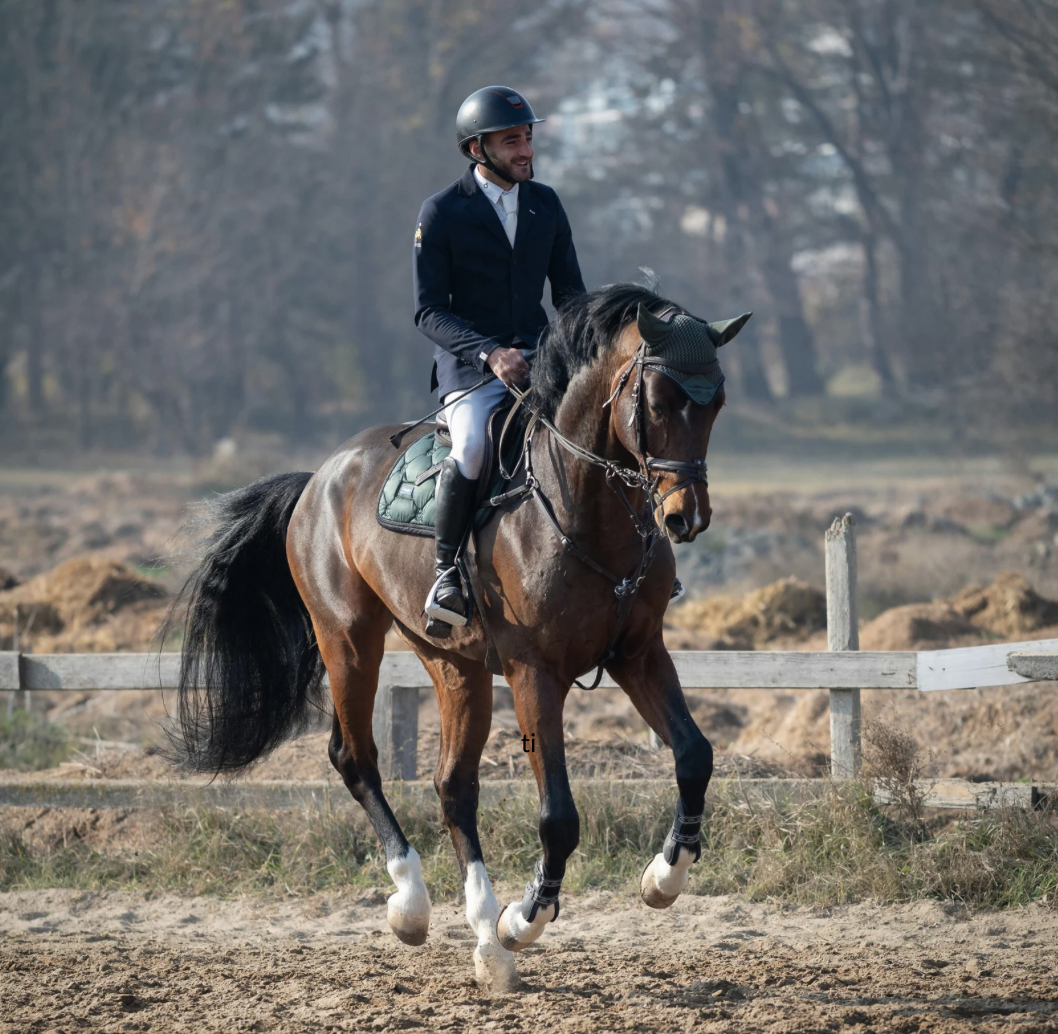
The FEI Dressage Handbook lists open mouth, tilted head, and broken neckline as disobedience. It is a classification that has frustrated researchers, welfare advocates, and practitioners for years — because each of those behaviours can equally signal that a horse is in pain. Kirstin Dunncliff’s thesis takes aim at this conflation and asks a direct question: if osteopathy reduces musculoskeletal pain in the performance horse, does behaviour improve as a consequence?


The foundation of the argument is built carefully. Horses are prey animals, evolved to suppress outward signs of vulnerability — including pain — in the presence of predators, which, functionally, includes us. Dunncliff draws on research demonstrating that horses exhibit significantly fewer pain behaviours when a caregiver is present, and that more than a third of horses in one study stopped displaying discomfort entirely when observed directly. This masking means that by the time a behaviour problem is visible enough to be labelled naughtiness, the underlying pain may have been present for some time.


The thesis provides a thorough survey of the tools now available for identifying equine pain — the Horse Grimace Scale, and Dr Sue Dyson’s Ridden Horse Pain Ethogram, which identifies 24 behaviours that, when eight or more are present, indicate musculoskeletal pain with high probability. These are not abstract research instruments; they are practical tools any equine professional can apply at the yard.


Against this backdrop, Dunncliff examines the osteopathic evidence. Studies of sacroiliac joint treatment, cranial osteopathy, and joint manipulation show measurable improvements in gait, posture, and pain threshold. One study recorded 79% positive outcomes following osteopathic treatment for back pain and poor performance. Another showed significant increases in beta-endorphin following treatment — a physiological marker of the body’s own pain-relief response being activated.


The honest conclusion is that the research base, while promising, still needs larger controlled trials that explicitly link osteopathic treatment to observable behavioural change over time. But the direction of the evidence is clear enough to act on. This thesis is essential reading for anyone who has ever been told their horse is simply being difficult.

Osteopathy for Canine Hip Dysplasia

7 Sep 2026 Canine

Click to view


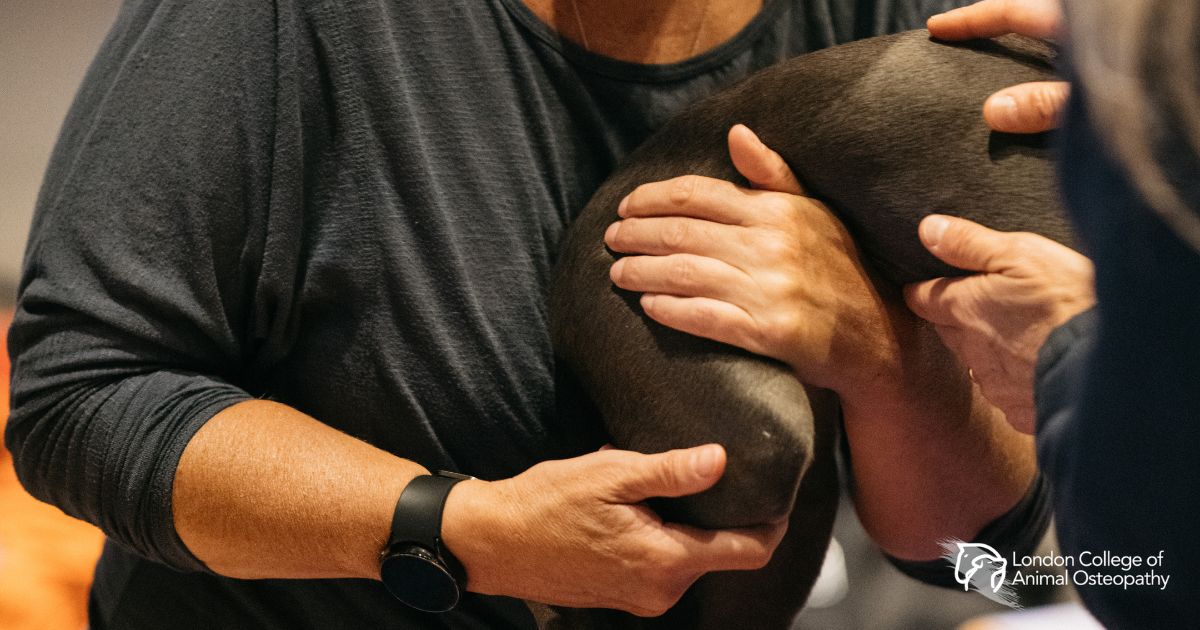
Hip dysplasia affects approximately 14 percent of the canine population, and in certain breeds — bulldogs, mastiffs, German shepherds among them — rates climb staggeringly higher. It is one of the most discussed orthopaedic conditions in veterinary medicine, yet the conversation tends to begin and end with surgery. What this thesis asks is whether the story is more nuanced than that.


Katlyn Sutcliffe examines canine hip dysplasia from the ground up: the anatomy of the coxofemoral joint, the interplay of genetic predisposition and environmental triggers, how the condition is diagnosed and scored, and which surgical options are currently available in Canada. But the core inquiry sits further downstream — in what happens to the body around a dysplastic hip, and whether osteopathic manual therapy can meaningfully intervene.


The mechanics of the condition paint a vivid picture of cascade. As the femoral head loses congruency within the acetabulum, cartilage degrades, muscles compensate, and the pelvis and spine begin to distort under the strain. Dogs may shift weight dramatically onto their forelimbs, developing overdeveloped neck and shoulder muscles while hindlimb muscles quietly atrophy. This is the territory where osteopathy operates — not reversing the structural abnormality, but working with the whole body that has reorganised around it.


Sutcliffe draws on techniques including myofascial release, osteopathic articular balancing, craniosacral therapy and functional technique, mapping each to specific presentations seen in dysplastic patients. The role of fascia in restricting lymphatic drainage, and therefore amplifying inflammation and pain, receives particular attention.


The thesis does not overstate its case. Direct clinical research on osteopathy for canine hip dysplasia remains limited, and the author is clear about that. What she builds instead is a well-reasoned theoretical framework — one that leaves the reader genuinely curious about what a formal study might confirm.

Rider Dysfunction and Equine Health

31 Aug 2026 Equine

Click to view


Walk into almost any equestrian yard and you will find horses on regular bodywork schedules and riders who have never considered booking a session for themselves. That imbalance sits at the heart of Katie McRory’s research. As a Craniosacral Therapist, Registered Massage Therapist and manual osteopathic practitioner, she noticed that only around ten percent of the riders in her practice received regular bodywork — and set out to understand what that gap might cost the horse.


The study assessed eight horse-and-rider pairs over a four-to-six week period. Riders were evaluated for postural and tissue restrictions while standing and in a supine position. Horses were assessed osteopathically, in free movement, under saddle with their own rider, and then again under saddle with an experienced professional — the latter providing an independent baseline against which rider-specific effects could be measured.


The results are striking in their consistency. Seven of the eight riders weighted the right side of their horse more heavily than the left. Patterns of restriction in the horse — across the shoulder, spine, hip, neck, poll and TMJ — aligned predictably with the specific dysfunction present in the rider. A hip restriction in the rider correlated with increased load on the corresponding side of the horse; a twist through the rider’s torso produced a recognisable signature in the horse’s lateral bend and shoulder mobility.


McRory develops a series of dysfunction statements from the data, grounded in the physics of load and torque and supported by Freyette’s Laws of spinal motion. The professional rider’s horse, notably, showed the least dysfunction of any pair in the study — demonstrating that skill and balance in the saddle can substantially offset the effects.


The conclusion is unambiguous: treating the horse while the rider’s dysfunction remains unaddressed is, at best, a maintenance strategy. For resolution, both partners need care. The data points clearly in that direction, and the thesis makes a compelling case for expanding the conversation around equine health to include the person on top.

OMT for Sacroiliac Rehab

28 Aug 2026 Equine

Click to view


Sacroiliac injury is one of the more elusive diagnoses in equine practice. The region sits deep beneath large muscle masses, the clinical signs are often ambiguous, and the gold-standard diagnostic tool — nuclear scintigraphy — sits behind a cost barrier that many owners cannot cross. The result is that a significant number of horses with chronic hindlimb lameness carry an unconfirmed sacroiliac component, managed as best they can be with the tools available.


Katalin Kincses-Jánosi writes from a dual position of authority — a veterinarian with a PhD who has also trained as an equine osteopath. Her thesis opens with a scholarly review of sacroiliac anatomy, clinical presentation, diagnostic approaches and rehabilitation principles, before narrowing into a case study that brings all of that knowledge to bear on a single patient: a senior chestnut Hungarian halfbred mare with persistent low-to-medium grade left hindlimb lameness.


The mare had already undergone arthroscopy for a separate stifle issue. The lameness remained. A subsequent diagnosis of fibrotic myopathy of the hamstrings added further complexity, and it was into this layered clinical picture that osteopathic manual treatment was introduced. Over a series of sessions spanning several months, Kincses-Jánosi documents her findings in detail — pelvic hypermobility, gluteal sensitivity, lumbar stiffness, asymmetrical rib cage response — and records the specific techniques applied, from whole-body osteoarticular balancing to strain-counterstrain on acupressure points to high-velocity low-amplitude pelvic manipulation.


Woven through the treatment sessions is a progressively evolving exercise programme: dynamic mobilisation of the back, pelvic flexion work, ground pole sequences and lateral movement exercises, each calibrated to the mare’s capacity at each stage and designed to build the deep stabilising musculature that the sacroiliac region depends upon.


What makes this thesis genuinely instructive is its honesty. Progress was not linear — an early introduction of cross-country terrain exercises temporarily worsened the lameness. The author reflects on why, adjusts, and continues. For practitioners working with complex, long-standing cases in older horses, this is an account worth reading in full.

1 2 3 … 6

Search

+