Not Just a Hose Job: The Right Way to Cool Dogs and Horses in Hot Weather

1 Sep 2025 Canine, Equine

Some myths are hard to kill. Every summer, they resurface, usually in Facebook threads with 150 comments and rising tension.

“Never hose a horse’s back!”

“Don’t pour water on dogs; it traps the heat!”

You’ve probably seen it. Maybe even argued it. So let’s cut through the noise and get down to what actually works, what doesn’t, and when the stakes are high enough to call the vet.

First: Heat Kills, Fast

Hyperthermia isn’t a vague risk. It’s a medical emergency. In dogs, a body temperature above 39.5°C (103.1°F) is considered abnormal, and above 41°C (105.8°F) is classified as heatstroke, with a high risk of organ damage, coagulopathies, and CNS dysfunction (1)(2).

Horses follow a similar pattern. Heatstroke is generally diagnosed when body temperatures exceed 41.5°C (106.7°F), with neurological signs and cellular injury likely to follow soon after (3).

So no, this isn’t just about comfort.

Signs You’re in Trouble

Whether it’s a dog or a horse, these are red flags:

  • Rapid, shallow breathing
  • Bright red (or very pale) gums
  • Weakness, wobbliness, or collapse
  • Vomiting (dogs), diarrhea (sometimes bloody)
  • Seizures or confusion
  • No longer sweating (in horses) despite high effort
  • Red gums/tongue (dogs & cats)
  • Panting (dogs & cats)
  • Drooling (dogs & cats) (9)
  • Collapse

If you’re seeing these? This is not the time to “let them rest in the shade” and reassess later. Call a vet immediately. Start cooling while you wait.

Cool Fast, Cool Properly

Let’s talk methods. Because yes, how you cool matters, but probably not in the way you’ve heard.

Horses: The Continuous Cold Water Debate

Here’s the short version: hosing is good. Repeated hosing with cold water is better. Scraping? Optional. And no, cold water doesn’t cause shock.

A number of studies have confirmed what we now know works: cold water applied continuously and repeatedly is one of the most effective ways to lower core body temperature in horses after exercise in hot conditions (4)(8). And no, you don’t have to avoid the large muscles or scrape between rounds. In fact, scraping actually slows the cooling process.

What to do:

  • Move the horse into the shade
  • Hose cold water over the entire body
  • Repeat continuously until rectal temp drops below 38.5°C
  • Use fans if you have them

Stop scraping. It’s not doing what you think it is. Scraping was useful when water was scarce or hot; today, it just slows you down.

Dogs: Water Is Not the Enemy

The claim that water “traps heat” on dogs? It’s a misinterpretation of evaporative cooling. Sure, if you pour water on and leave it without airflow, it won’t help much. But if you’re using cold water and creating airflow (with a fan, breeze, or toweling), it’s effective (5).

What to do:

  • Get them into shade or air con
  • Soak with cool water: belly, armpits, paws
  • Use a fan or breeze to promote evaporation
  • Offer water to drink (but don’t force it)
  • If temp >40°C (104°F), get to a vet now
  • Cool water immersion if the dog is otherwise young and healthy (9)
  • Hosing with cool water (ensure it is running cool before applying)

Don’t wrap them in wet towels. That insulates heat unless you repeatedly change them. Other methods, such as those listed above, are more effective. And don’t wait for panting to “settle”; panting alone doesn’t cool enough in high humidity. If in any doubt, call your vet immediately as further intervention may be necessary.

Common Myths (And Why They Stick Around)

Some of these beliefs have been around for decades. Let’s unpack a few:

“Cold water causes shock.”
This comes from confusion with immersion shock in humans. Animals don’t respond the same way. Gradual cooling doesn’t increase the risk of shock; it reduces the risk of organ damage.

“Scraping water is essential.”
Only if you’ve got gallons of hot water and no breeze, otherwise, keep spraying (4).

“Cooling must be slow.”
Nope. Rapid cooling saves lives. Delays kill (1)(4).

Other Factors That Raise Risk

Even well-cared-for animals can overheat. But some are more at risk:

  • Brachycephalic breeds (Pugs, Frenchies, Bulldogs)
  • Horses with anhidrosis (poor/no sweating)
  • Obese or heavily muscled animals
  • Thick-coated breeds in humid weather
  • Older or chronically ill animals

And don’t forget: if they’ve overheated once, they’re more vulnerable next time. Heatstroke causes cumulative damage.

Final Thoughts: Don’t Wait to Be Sure

By the time you’re sure it’s heatstroke, you’re probably already late. When in doubt, cool and call. You won’t regret being wrong, but you will regret being too late.

Resources

1. VCA Animal Hospitals. Heat Stroke in Dogshttps://vcahospitals.com/know-your-pet/heat-stroke-in-dogs

2. Pathophysiology of heatstroke in dogs – revisited. PMC, 2018. https://www.ncbi.nlm.nih.gov/pmc/articles/PMC5800390/

3. Marlin, D.J., & Nankervis, K. (2002). Equine Exercise Physiology. Wiley-Blackwell. Summarised in: AAEP Guidelines on Heat Stress: https://aaep.org/horsehealth/heat-stress-horses

4. Marlin, D.J., Scott, C.M., Roberts, C.A., Casas, I., Holah, G., & Schroter, R.C. (1998). Post exercise cooling strategies in hot, humid conditions. Equine Veterinary Journal, 30(S27), 337–340. https://doi.org/10.1111/j.2042-3306.1998.tb04426.x

5. ACVIM / VETgirl. How to Treat Heatstroke in Dogs. VetGirl Veterinary Continuing Education blog. “Heatstroke is defined as a non‑pyrogenic elevation in core body temperature greater than 105.8 °F (41 °C) along with central nervous system dysfunction.” https://vetgirlontherun.com/how-to-treat-heastroke-in-dogs-vetgirl-veterinary-continuing-education-blog/

6. Veterinary Voices UK. Cool, Icy, Cold or Tepid? What’s Best for Heat Stroke? Myth‑Busting blog post, June 26, 2024. “Pour, hose or if possible immerse the pet in very cold water… Do not drape in towels and leave them in situ.” https://www.vetvoices.co.uk/post/cool-icy-cold-or-tepid

7. VetCompass UK – Heat-Related Illness in Dogs: Risk Factors and Clinical Signs. https://www.vetcompass.org/media/1312/heat-related-illness-dogs.pdf

8.Vet Times (2022). Don’t be afraid of the hosepipe – cold water won’t cause shock in horses. https://www.vettimes.co.uk/news/dont-be-afraid-of-the-hosepipe-cold-water-wont-cause-shock-in-horses/

9. Royal Veterinary College (RVC). Heatstroke in Dogs and Cats: Fact File. Royal Veterinary College Small Animal Department. “Dogs and cats can suffer from heatstroke, a life-threatening condition where the body temperature increases … organ failure and even death can occur.” https://www.rvc.ac.uk/small‑animal‑vet/teaching‑and‑research/fact‑files/heatstroke‑in‑dogs‑and‑cats
Red Flags in Animal Osteopathy That Should Trigger Immediate Veterinary Referral

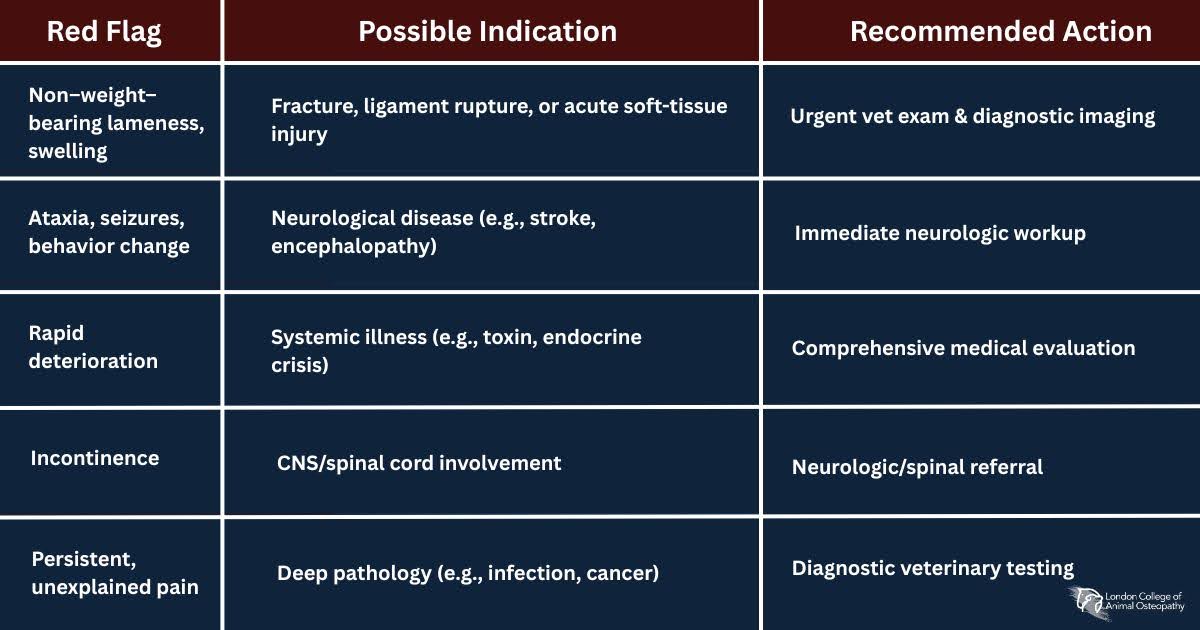
Accurate assessment is critical in animal osteopathy. Sometimes, the most professional decision is knowing when not to treat. If you notice any of the following red flags during your evaluation, referring the animal promptly to a veterinarian isn’t just recommended; it’s essential for the animal’s safety and well-being.

Sudden-Onset, Non–Weight–Bearing Lameness, Especially with Swelling

Non–weight–bearing lameness (when an animal completely stops using a limb) is often a sign of a serious condition such as a fracture, joint dislocation, or cruciate ligament rupture. Even in the absence of visible injury, swelling and heat around the limb further indicate acute injury or inflammation.

VCA Animal Hospitals notes that sudden lameness in dogs is often due to bone fractures, joint injuries, or soft-tissue damage, and cautions against manual treatment without prior imaging. (1, 2).

Point Grey Veterinary Hospital reinforces that non–non-weight-bearing lameness accompanied by swelling or inability to stand should be treated as emergencies requiring veterinary attention (3).

Neurological Signs: Ataxia, Seizures, Behavioural Changes

Signs such as stumbling (ataxia), tremors, sudden seizures, head tilt, or marked behavior shifts suggest neurological involvement; these Conditions require prompt diagnostic workup.

A PubMed case report described a dog presenting with hindlimb ataxia and generalized seizures due to osmotic demyelination syndrome. Diagnosis and treatment occurred only after referral and specialist workup (4).

Veterinary neurology references describe acute onset seizures or ataxia as potential signs of stroke, encephalitis, or spinal cord injury, underscoring the need for immediate veterinary intervention (5).

Rapid Deterioration in Overall Condition

A swift decline in an animal’s health, not always linked to pain, may indicate serious systemic disease such as toxin exposure, internal hemorrhage, endocrine crisis, or infection.

Emergency veterinary resources highlight how acute systemic presentations (e.g., collapse, sudden weakness, stupor) can reflect life-threatening conditions requiring emergency diagnostics and treatment.

Bladder or Bowel Incontinence

Sudden loss of bladder or bowel control often points to spinal cord compression, acute neurologic disease, or pelvic injuries.

Neurological assessment tools emphasise incontinence as a clinical marker for serious CNS involvement, such as myelopathy or intervertebral disk disease.

Persistent or Unresponsive Pain

If an animal continues to exhibit significant pain that doesn’t align with musculoskeletal findings and doesn’t improve with rest, simple exercises, or prior treatments, deeper pathology should be suspected.

Diagnostic guidelines for gait and pain assessment encourage practitioners to pursue imaging or laboratory analysis when pain is unexplained by physical examination alone (6).

Summary Table

Final Word

When clients bring in an animal with any of these red flags, proceeding with osteopathic techniques could compromise patient safety and potentially delay proper diagnosis and treatment. Early recognition and referral preserve professional integrity and, most importantly, protect the animals in your care.

References

1. Lameness in Dogs. VCA Animal Hospitals. Lameness (collapsed, non-weight-bearing lameness). https://vcahospitals.com/know-your-pet/lameness-in-dogs (peakpeturgentcare.com, vcahospitals.com)

2. When Paws Pause: Understanding Limping in Pets & The Diagnostic Journey. Santa Monica Vet. https://santamonicavet.com/when-paws-pause-understanding-limping-in-pets-the-diagnostic-journey/ (santamonicavet.com)

3. Dog Limping Causes. Point Grey Veterinary Hospital. https://pointgreyvet.com/dog-limping-causes/ (pointgreyvet.com)

4. Hindlimb Ataxia Concurrent With Seizures; Osmotic Demyelination in a Dog. PubMed (Case Report). https://pubmed.ncbi.nlm.nih.gov/35782535/ (pubmed.ncbi.nlm.nih.gov)

5. Case Report: Hindlimb Ataxia Concurrent With Seizures by Presumed ODS. ResearchGate PDF. https://www.researchgate.net/publication/361369519 (researchgate.net)

6. Specific Neurological Disorders in Emergency Medicine. Cambridge Handbook of Emergency Neurology. https://www.cambridge.org/core/books/handbook-of-emergency-neurology/specific-neurological-disorders-in-emergency-medicine/28CD83F61C29405A8FFE13951E04140C (cambridge.org)

7. A Systematic Approach to Diagnosing Canine Pelvic Limb Lameness. DVM360. https://www.dvm360.com/view/a-systematic-approach-to-diagnosing-canine-pelvic-limb-lameness (dvm360.com)

8. Orthopedic Conditions of the Canine Limbs. American Physical Therapy Assn. PDF. (orthopt.org)

Headaches and Headshaking in Equine Patients

25 Aug 2025 Equine

Chris Bates M.Ost, DipAO, EEBW, BHSAI

Owners and riders of horses may, at some point, experience the frustration of not knowing what to do in the event of their horse becoming a “headshaker”. There can be many different reasons for horses to head-shake, and so the most important thing is to work with the Vet and other paraprofessionals to ensure a cause (or likely cause) is found.

Head-shaking can become dangerous in extreme cases by unbalancing the horse, leading to potential falls, secondary trauma through head impact, or potentially injuring a handler or rider. The causes of headshaking can also create learned behaviors that become very hard to decondition.

Headshaking 

The presentation of a head-shaker will vary, but many clinical signs are common. Most head shaking will be up and down on the sagittal plane, while some may twist and rotate at the same time.

Sometimes the actual action of the headshake can help to identify a cause and isolate maintaining factors involved. The action of headshaking is sometimes quite violent and sometimes just a bobbing action; however, even the most light of headshaking will, over time, produce secondary concerns.

Veterinary attention will seek to rule out other causes before concluding a headache. It is important to remember that a headache could arise as a result of another initial cause. Some potential triggers for headshaking could include:

  • Mites (in the ear)
  • Otitis media/interna/externa (ear infections)
  • Ocular conditions
  • Guttural pouch infections
  • Dental issues
  • Rhinitis

The list could go on… (Lane and Mair, 1987)

Obvious signs of infection, both clinically observed and through lab testing, would not discount a headache, as pain could be a secondary factor and maintain or exacerbate the head shaking.

The action of headshaking in horses can often become more noticeable or prevalent during exercise, often showing no signs at rest. There may also be a seasonal difference in symptoms, which may indicate an allergic rhinitis present. Around 60% of headshakers have shown spring/summer seasonal worsening of symptoms (Roberts, 2019).

Headaches

There can be a multitude of factors that lead to headaches in horses. The type of headache will depend on the pathophysiology of the causes, but various types can lead to headshaking behaviours.

Potential causes can include:

  • Dental issues
  • Sinusitis
  • Cervical spine dysfunctions
  • Poll issues
  • Meningitis
  • Space-occupying lesions – Tumours, Abscesses
  • Cranial trauma
  • Neuralgia

Clearly, with some causes, lab testing and veterinary clinical examination can make the definitive diagnosis to allow for treatment. However, sometimes the cause or even causes of the headache can be more elusive, and it may require a process of elimination type approach.

Headache pain can be worse on exertion, and so horses may react more when ridden or driven. Even a mild headache can affect the horse when under saddle or in work, and this impact can often be misconstrued as a behavioural issue. Of course, no amount of training will fix a headache.

Central sensitisation

When we consider the reactions of the horse who is suffering from a headache, they may not seem entirely congruent with the present trigger or obvious trauma/condition. This may be due to the pain sensitivity being “dialed up” internally. Central sensitisation is a state of heightened responsiveness in the central nervous system, which can amplify pain signals.

There may not be present inflammation or tissue damage, but hyper-excitability of the nervous system can signal the same level of pain as if there were severe trauma.

The causes are many and complex, and the study of this Nociplastic pain (as it is now often called) is continuous. Hormonal imbalances are sometimes highlighted as a trigger, as are chronic inflammatory states; however, there can be a genetic predisposition or even psychological influences.

One way to imagine the process taking place is to think of the nervous system like pathways through a dense forest. If someone walks a particular pathway every day, treading down the plants and clearing the route, then the pathway becomes easier to navigate. If a nociceptive (pain) pathway is continuously stimulated, then this same phenomenon could be responsible for the increased sensitivity. In this sense, it is easy to see how even a rider’s or handler’s activities around the horse could lead to sensitivities.

Osteopathy for Headache and Headshakers

As discussed in previous articles, and is always the case, a proper veterinary diagnosis is essential before we, as Osteopaths, aim to assess and treat. Vets often refer to Osteopaths and other paraprofessionals for this kind of condition, as a multi-disciplined approach is often the best course of action.

Osteopathic assessment of the horse may be able to isolate a causative factor and maintain factors within the head and neck, and so treatment may be only regional. However, there may be wider factors that the Osteopath can address. There may be postural concerns that are impacting the horse’s head and neck positioning; these could be a result of spinal restriction, foot and limb balance, or an injury.

If the horse’s head and neck position is affected to the point of making compensatory patterns, then this could, in turn, trigger headache pain. There is also the possibility of jaw alignment or the hyoid apparatus being affected by more distal structures due to large muscle connections with the shoulder and neck. Jaw pain or temporomandibular joint dysfunction could trigger headshaking.

The key factor in a treatment being Osteopathic is that it is guided by the principles and philosophy of Osteopathic medicine. The body functions as an interconnected unit, therefore, the practitioner who is aware of this may find triggers and causes that seem as though they would be far removed from the symptomology. It is a case of tracking what is found in a logical way to the presenting complaint.

With the trigeminal nerve being a major factor in a large number of equine headache cases (Newton, Knottenbelt and Eldridge, 2010), the Osteopath may seek to find areas where the path of that nerve is compromised. This perversion of function could be through compression or stretch of the nerve, for example.

Remember that structure and function are reciprocally interrelated. The compression or malposition of the nerve structure will alter the function, resulting in pain or numbness. Various structures can compromise nerve pathways, including muscle, bone, fluid swelling, and space-occupying lesions like tumors.

If we find that neural pathways are being perverted by muscle tension, then we can apply soft tissue release techniques to alleviate pressure on them. To be complete, however, we may want to ask the question “why is this muscle/muscles doing this?”.

There will be a configuration that requires the muscle to be in this state; our work can then seek to discover why. This configuration could be a postural or traumatic positioning that necessitates it, or it could be environmental, such as horses’ feeding position or tack influences.

While a headache that is caused by temporomandibular joint (TMJ) dysfunction may be treated by articulation of the joints, release of the masseter, temporalis, and pterygoid muscles, the actual reason for the joint dysfunction may be further away.

It might be that the TMJ dysfunction is caused by stress and subsequent jaw clenching and tooth grinding. This could be found within the case history and questioning when the owner mentions the horse is grazed alone and spends time walking the fence line, and calling. The practitioner may suggest a gradual introduction of a field companion to allow for natural behaviour to flourish and reduce stress.

What can we do to avoid headshaking?

There will, of course, be some cases of headache and or headshaking that will be beyond our control to avoid, such as traumatic injury or neoplastic (cancer).

Our role as owners and keepers of horses is to ensure that all possible precautions are taken and that any signs of illness are picked up on as soon as possible.

Much of the time, it is education and awareness that help to improve horse care and welfare. Many owners are not aware of the intricacies of tack fitting, and of course, professionals train for years to become proficient in this. Some simple checks can help, however.

  • Check the pressure of the bridle at key points of contact, such as the poll, nose band (if using one), and around the ears.
  • Ask a professional (saddler or trainer) to help you fit the bridle and ensure that the position of all parts are correct.
  • Check for any sharp or irritating parts of the tack, such as loose stitches, sharp edges, and bulky straps.
  • Try different types of bridle sets up and materials to see what suits your horse best.

If your horse is sensitive to dust and pollen, then you may find that keeping your riding or exercise to times of the day when pollen count or dust is lower is best. You could also investigate the use of nose nets or applying pollen capture gels around their nostrils. Nasal irritation can be a cause for headshaking and so try keeping their nose clean with a soft sponge and clean water to gently clean around the other part of their nostrils.

It is good practice to regularly get your horse’s teeth checked by a vet or equine dental technician. Remember, however, that only vets can perform certain dental procedures. Some younger or older horses may need checking on more regular intervals, around 6 months. Other horses may be able to have their teeth addressed annually. The important thing is to ensure you follow the recommendations from your vet.

Having a good grooming routine helps you to investigate your horse’s reaction to touch around the head, check for signs of mites or insect bites, and look for any signs of injuries. Some Osteopaths will suggest scanning with your hands when grooming, as you can pick up things like temperature changes or lumps and bumps. This can often find potential causes of headshaking and headache before they become problematic.

Some owners will keep an equine specific thermometer in their first aid kit, and this can be useful to monitor changes that can occur during infection. Some horses can develop guttural pouch or dental infections, and this can create pain and headshaking.

If you notice signs of swelling around the jaw or face, then this can also be a sign of infection. Other signs to watch out for are general malaise, feeding problems, dehydration, dull coat, and nasal discharge.

Conclusion

There can be very serious health concerns causing horses to head shake. All cases should be checked by the vet first to rule out complications that may need urgent medications or surgery. Even when a serious complication is present, the vet may still recommend the help of an Animal Osteopath. As described above, the best way to avoid this from occurring is generally just good horse husbandry and care. Get to know the horses/’s you care for well and you will notice changes in their behaviour and health very easily.

Bibliography:

LANE, J.G. and MAIR, T.S. (1987). Observations on headshaking in the horse. Equine Veterinary Journal, 19(4), pp.331–336. doi:https://doi.org/10.1111/j.2042-3306.1987.tb01424.x.

Newton, S.A., Knottenbelt, D.C., and Eldridge, P.R. (2010). Headshaking in horses: possible aetiopathogenesis suggested by the results of diagnostic tests and several treatment regimes used in 20 cases. Equine Veterinary Journal, 32(3), pp.208–216. doi:https://doi.org/10.2746/042516400776563617.

www.sussexequinehospital.co.uk. (2025). Head Shaking. [online] Available at: https://www.sussexequinehospital.co.uk/en-gb/news-events/factsheets/head-shaking [Accessed 8 May 2025].

Roberts, V. (2019). Trigeminal-mediated headshaking in horses: prevalence, impact, and management strategies. Veterinary Medicine: Research and Reports, Volume 10, pp.1–8. doi:https://doi.org/10.2147/vmrr.s163805.

When the Owner Feels Better: Understanding Bias and Placebo Effects in Veterinary Treatment

Exploring Cognitive Bias, Observer Bias, and Non-Specific Treatment Effects in Companion Animal Care

In human healthcare, the placebo effect is well established. But what happens in veterinary care, where the patient can’t speak? While animals may not experience a placebo in the traditional sense, the caregiver placebo effect, observer bias, and non-specific treatment effects all play significant roles in shaping perceptions of success in veterinary treatment.

What is the psychology behind these effects? How they can influence both clinical decision-making and owner satisfaction, and what evidence tells us about reducing bias in animal care.

The Caregiver Placebo Effect: When Owners Perceive Improvement

Animals may not expect a treatment to work, but their caregivers often do — and those expectations can shape what they think they see.

A placebo-controlled study of dogs with osteoarthritis found that while 56% of owners reported improvement in their dog’s condition, only 8% showed objective improvement using force-plate gait analysis (JAVMA, 2012).

This discrepancy highlights how owner belief and hope can lead to overestimation of treatment effectiveness, especially in conditions involving chronic pain or subtle behavioral changes.

Cognitive Biases in Clinical Practice

Veterinary professionals are not immune to bias either. Cognitive biases affect how information is interpreted and can lead to confirmation of what a clinician expects to find.

Key types of bias include:

  • Confirmation bias: The tendency to seek or interpret evidence in ways that affirm pre-existing beliefs
  • Anchoring bias: Relying too heavily on initial impressions or diagnoses, even when new evidence arises

These biases are subtle but powerful. A review by McKenzie (2014) in the Journal of the American Veterinary Medical Association emphasised how they can influence clinical reasoning and lead to overconfidence in unproven interventions (ResearchGate).

Observer Bias in Animal Studies

In studies involving animals, observer bias can lead to misinterpretation of subtle changes in behaviour, gait, or attitude.

A 2014 paper in Applied Animal Behaviour Science showed that observer expectations could significantly distort data collected during behavioral research, especially when outcomes are subjective (ScienceDirect).

Blinding observers to treatment groups is one way to mitigate this, but it’s not always feasible in real-world practice.

Non-Specific Treatment Effects: More Than Just the Medicine

Non-specific effects refer to any improvement not directly caused by the therapeutic agent — for example, the act of doing something, increased attention to the animal, or changes in routine.

A 2017 meta-analysis from BMC Veterinary Research compared conventional veterinary medications with homeopathy and found that non-specific treatment effects contributed significantly to owner-perceived improvements, even when the therapy itself was biologically implausible (PMC).

These findings support the need to separate true treatment efficacy from the “halo” created by the therapeutic encounter itself.

What Can Practitioners Do About It?

Veterinary clinicians and allied professionals can take several steps to minimise bias:

  • Use objective measures: Where possible, rely on tools like force plate analysis, range of motion goniometry, or validated pain scales
  • Blind assessments: Even informal blinding (e.g., different clinicians assessing progress) can reduce bias
  • Manage expectations: Be transparent with clients about expected outcomes and the potential for bias
  • Commit to continuing education: Awareness is the first step toward clinical objectivity

Implications for Canine Practitioners, Equine Specialists, and Animal Osteopaths

Understanding the influence of bias and non-specific effects is especially important for manual therapists like osteopaths, who often work in close partnership with animal owners. In canine and equine osteopathy, treatments typically involve subtle changes in mobility, comfort, and behavior; areas that are inherently difficult to measure objectively and highly susceptible to observational and caregiver bias.

For animal osteopaths:

  • Client education is key. Owners may perceive improvement simply because they believe in the practitioner’s skill or the hands-on nature of treatment. Transparent communication about what signs of change to look for and what timeframes are realistic, helps manage expectations.
  • Objective baselines and reassessment tools, such as video gait analysis, behavioural logs, or validated pain scoring systems, can help practitioners more accurately assess changes over time.
  • Referral and collaboration are vital when progress stalls or red flags appear. Maintaining a clear boundary between manual therapy and medical diagnosis ensures professional integrity and patient safety.

Whether you’re working on a warmblood with sacroiliac pain or a Labrador with lumbosacral discomfort, grounding your practice in evidence and awareness of bias strengthens both outcomes and trust.

While animals don’t experience placebo effects directly, their humans, and sometimes their practitioners, do. Understanding and addressing caregiver placebo, cognitive biases, and observer effects is essential in making veterinary or manual treatment, such as osteopathy, more objective, ethical, and evidence-based.

References

  1. Conzemius, M. G., & Evans, R. B. (2012). Caregiver placebo effect for dogs with lameness from osteoarthritis. Journal of the American Veterinary Medical Association, 241(10), 1314–1319. https://pubmed.ncbi.nlm.nih.gov/23113523/
  2. Brennen A. McKenzie, MA, VMD. (2014). Veterinary clinical decision-making: Cognitive biases, external constraints, and strategies for improvement. Journal of the American Veterinary Medical Association 244(3):271-6 .https://www.researchgate.net/publication/259768660_Veterinary_clinical_decision-making_Cognitive_biases_external_constraints_and_strategies_for_improvement
  3. Sorge, R. E., & Oliver, M. H. (2014). Observer bias in animal behavior research. Applied Animal Behaviour Science, 158, 1–6. https://www.sciencedirect.com/science/article/abs/pii/S000334721400092X
  4. Bergh, A., Lundin, F., & Pettersson, K. (2017). Evidence of placebo effects in veterinary homeopathy: A systematic review and meta-analysis. BMC Veterinary Research, 13, 301. https://www.ncbi.nlm.nih.gov/pmc/articles/PMC5738587/

Beyond the Hips and Elbows: Atypical Presentations of Osteoarthritis in Dogs

18 Aug 2025 Canine

When we think about osteoarthritis (OA) in dogs, our minds often jump straight to the hips and elbows, and with good reason. These are the most commonly affected joints, particularly in breeds predisposed to hip or elbow dysplasia. But OA doesn’t always follow the “classic” patterns. In fact, it can show up in far less obvious places, quietly affecting a dog’s comfort, mobility, and quality of life in ways that are easy to miss if we’re not looking for them.

Let’s take a closer look at the less-talked-about joints, the carpus, hock, digits, and even the spine, and explore how these atypical presentations can subtly change a dog’s movement, behavior, and day-to-day function.

Why Atypical OA Matters

Osteoarthritis is a degenerative joint disease characterised by cartilage breakdown, synovial inflammation, osteophyte formation, and changes in subchondral bone [1]. While large, weight-bearing joints are most often discussed, any synovial joint in the body can be affected. Atypical sites are often overlooked in general practice, especially when signs are mild or masked by compensation.

Carpal OA: The Silent Stiffness

The carpus is vital for shock absorption and flexion during locomotion. Arthritis in this joint may not cause overt lameness early on, but signs may include:

  • Reluctance to jump or go downstairs
  • Reduced range of motion in flexion
  • Stiffness after rest
  • Flattening or “pancaking” of the paw during stance

Radiographic evidence of carpal OA is relatively uncommon compared to hips or elbows, but it does occur, particularly in working dogs or those with a history of repetitive strain or trauma [2].

Hock OA: A Subtle Hind-End Saboteur

The tarsus (hock) is another joint that gets little attention until something goes wrong. Dogs with hock OA may show:

  • Abnormal limb carriage (e.g., toe-touching or inward rotation)
  • Difficulty navigating uneven terrain
  • Decreased propulsion when running or climbing
  • Overdevelopment of compensatory muscles in the lumbar or gluteal region

Hock OA can result from chronic instability, as seen in shelties or collies with tarsal injuries, or post-traumatic arthritis in active breeds [3].

Digits: When the Toes Take the Hit

The interphalangeal joints are small, but they bear significant force with each step. Toe OA often flies under the radar because:

  • Dogs may simply appear “off” without clear lameness
  • Owners may report vague signs like “slowing down”
  • It’s often dismissed as age-related stiffness

Toe OA is particularly common in large breeds, senior dogs, or those with past ligamentous injuries. One study found interphalangeal OA in 13% of dogs undergoing full-body radiographs for unrelated conditions [4].

Axial Joints: Spine and Sacroiliac Involvement

Though technically distinct from appendicular OA, degenerative changes in the spine, including spondylosis deformans and facet joint OA, are increasingly recognised in ageing dogs. These changes can:

  • Mimic hip OA symptoms
  • Cause reluctance to jump or twist
  • Lead to compensatory overload in thoracic limbs

Advanced imaging (CT/MRI) is often required to accurately assess these changes, but clinical suspicion should be high in dogs with back pain, hindlimb weakness, or poor response to traditional OA therapies [5].

Clinical Relevance: What to Watch For

In atypical OA, behavioral and functional changes are often more telling than overt lameness. Watch for:

  • Shifting weight or frequent postural changes
  • Persistent licking or chewing at a limb
  • Avoidance of certain movements (e.g., digging, sharp turns)
  • Reduced performance in working or sporting dogs

Gait analysis, palpation, and range-of-motion testing are essential to pick up subtle deficits. Diagnostic imaging can confirm, but shouldn’t replace clinical insight.

A Multimodal Mindset

Management of atypical OA is similar to classic OA but may require more targeted strategies:

  • Manual therapies (osteopathy, physio, massage) can improve joint mobility and reduce compensatory strain.
  • Low-impact exercise like underwater treadmill therapy helps maintain function without overload.
  • NSAIDs, gabapentin, and disease-modifying osteoarthritis drugs (DMOADs) are often used pharmacologically.
  • Weight management remains critical, especially for distal limb and spinal OA [6].

Final Thoughts

Osteoarthritis in dogs is not always where you expect it, and that’s exactly why we need to stay curious. By widening our clinical lens beyond the hips and elbows, we can catch the quieter forms of OA early and intervene with strategies that truly make a difference.

References

  1. Johnston, S. A. (1997). Osteoarthritis. Joint anatomy, physiology, pathobiology, and basic treatment principlesVeterinary Clinics of North America: Small Animal Practice, 27(4), 699–723. https://doi.org/10.1016/S0195-5616(97)50075-3

  2. Paster, E. R., & Bristol, D. G. (2003). Carpal and Tarsal Joint Disease in Dogs. Compendium on Continuing Education for the Practicing Veterinarian, 25(2), 110–122.
  3. Kapatkin, A. S., et al. (2002). Tarsal osteoarthritis: A retrospective study. Veterinary Surgery, 31(2), 127–132. https://doi.org/10.1053/jvet.2002.31763

  4. Morgan, J. P., et al. (1968). Skeletal dysplasias and arthropathies in the dog. Veterinary Radiology, 9(4), 122–131.
  5. Dewey, C. W., & da Costa, R. C. (2015). Practical Guide to Canine and Feline Neurology. Wiley-Blackwell.
  6. Moreau, M., et al. (2010). Clinical evaluation of a nutraceutical, carprofen and meloxicam for the treatment of dogs with osteoarthritis. Veterinary Record, 166(3), 72–77. https://doi.org/10.1136/vr.b4713

Celebrating Veterinary Nursing Awareness Month 2025

May marks Veterinary Nursing Awareness Month (VNAM) in the UK, a time dedicated to recognising the invaluable contributions of veterinary nurses. Spearheaded by the British Veterinary Nursing Association (BVNA), this year’s VNAM carries the theme “Progression,” celebrating the evolution and advancement of the veterinary nursing profession over the past 60 years.

The Multifaceted Role of Veterinary Nurses

Veterinary nurses are integral to animal healthcare, performing a wide array of tasks that extend beyond what many might expect. Their responsibilities include:

  • Clinical Expertise: Administering medications, monitoring anaesthesia, assisting in surgeries, and performing diagnostic tests such as X-rays and blood analyses.
  • Preventative Care: Leading clinics focused on nutrition, weight management, vaccinations, and dental health, aiming to prevent illnesses before they arise.
  • Client Education: Acting as a bridge between veterinarians and pet owners, veterinary nurses provide guidance on post-operative care, medication administration, and general pet wellness.
  • Emotional Support: Offering compassion and understanding to pet owners during challenging times, such as dealing with a pet’s illness or end-of-life care.

Celebrating Progress and Dedication

The “Progression” theme not only highlights the expanding roles and responsibilities of veterinary nurses but also underscores the need for continued professional development and recognition. The BVNA encourages the public and veterinary professionals to participate in VNAM by nominating outstanding veterinary nurses or teams as the “diamond in your practice,” celebrating those who exemplify excellence in their field.

The Importance of Recognition

While veterinary nurses are highly skilled professionals, their work often goes unnoticed. A study revealed that although 90.5% of respondents held a positive opinion of veterinary nurses, many lacked a full understanding of their roles. VNAM serves as an opportunity to educate the public about the critical functions these professionals perform daily.(The Veterinary Nurse)

How You Can Participate

  • Share Stories: Use social media to highlight the work of veterinary nurses, using hashtags like #VNAM2025 and #WhatVNsDo.
  • Nominate a Nurse: Participate in the BVNA’s competition by nominating a veterinary nurse or team that has made a significant impact.
  • Educate Yourself and Others: Learn more about the roles of veterinary nurses and share this knowledge within your community.

Veterinary Nursing Awareness Month is a time to acknowledge and celebrate the dedication, skill, and compassion of veterinary nurses. Their contributions are vital to the health and well-being of animals and the peace of mind of pet owners. Let’s take this opportunity to shine a light on their indispensable role in animal healthcare.

Osteoarthritis in Horses and Dogs

Osteoarthritis in Horses and Dogs: Understanding the Condition and Supporting Long-Term Wellness

May is Arthritis Awareness Month, a time to shed light on one of the most common, and often misunderstood, degenerative conditions affecting animals: osteoarthritis (OA). Whether it’s an aging Labrador struggling to get up or a sport horse becoming subtly uneven under saddle, OA affects quality of life, performance, and comfort in profound ways.

What Is Osteoarthritis?

Osteoarthritis, also known as degenerative joint disease, is a chronic, progressive condition characterised by:

  • Cartilage degeneration
  • Bone remodeling
  • Synovial inflammation
  • Joint capsule fibrosis

Unlike inflammatory arthritis (e.g., immune-mediated conditions), OA is primarily mechanical and degenerative in nature, though inflammation plays a role in its progression [1,2].

Causes of Osteoarthritis in Horses and Dogs

OA typically develops due to a combination of mechanical stress and biological changes. The most common contributing factors include:

In Horses:

  • Wear and tear from repetitive loading (especially in sport horses)
  • Joint trauma (e.g., from poor footing, falls, or intense training)
  • Conformational abnormalities
  • Developmental joint diseases (e.g., OCD, physitis) [3,4]

In Dogs:

  • Hip or elbow dysplasia
  • Cruciate ligament injury (common precursor to stifle OA)
  • Obesity (increased joint load)
  • Poor conformation
  • Aging and general wear [5,6]

In both species, early-life joint stress and inadequate rehabilitation after injury are key contributors [7].

Clinical Signs to Watch For

The signs of OA can be subtle at first, gradually becoming more obvious as the disease progresses:

In Horses:

  • Stiffness when starting work
  • Reduced performance or reluctance to work
  • Changes in movement quality or asymmetry
  • Behavioral changes (e.g., resistance, ear pinning under saddle)
  • Swelling or thickening around joints [8,9]

In Dogs:

  • Reluctance to jump, climb stairs, or get up
  • Lameness or stiffness, especially after rest
  • Decreased activity or play
  • Changes in gait or posture
  • Muscle loss (especially hind limbs) [10,11]

Because OA often progresses slowly, early signs may be dismissed as “just aging”, but early intervention can significantly improve long-term outcomes.

Veterinary Management of Osteoarthritis

Veterinary treatment aims to reduce pain, slow disease progression, and improve function. Key options include:

  • Non-steroidal anti-inflammatory drugs (NSAIDs) – First-line for pain management.
  • Disease-modifying osteoarthritis drugs (DMOADs) – Including PSGAGs (e.g., Adequan or Cartrophen)
  • Intra-articular therapies – Such as corticosteroids, hyaluronic acid, or regenerative options like PRP and stem cell therapy.Weight management – Essential in dogs.
  • Surgical options – In severe or end-stage cases (e.g., joint replacement, arthrodesis) [12–15].

Regular veterinary check-ups are essential to monitor progression and adjust the plan accordingly.

How Osteopathy and Rehab Therapies Help

Osteopathy offers a gentle, holistic approach to managing osteoarthritis by addressing compensatory patterns, biomechanical stress, and neurovascular imbalances that arise due to chronic joint dysfunction.

Osteopathic Approaches May Include:

  • Myofascial release to reduce tension in surrounding tissues
  • Joint mobilisation to maintain range of motion in unaffected or adjacent joints
  • Visceral and craniosacral techniques where systemic strain is contributing to dysfunction
  • Postural rebalancing to offload affected joints [16,17]

In dogs, osteopathic treatment may focus on pelvic alignment and lumbar strain, particularly in cases involving hip or stifle OA. In horses, attention is often placed on lumbo-sacral compensation, shoulder mechanics, and pelvic symmetry [18].

Complementary Rehab Modalities:

  • Hydrotherapy – Excellent for joint unloading and muscle strengthening
  • Laser therapy – Reduces inflammation and pain
  • Pulsed Electromagnetic Field Therapy (PEMF) – Stimulates cellular repair
  • Therapeutic exercise – Maintains muscle mass and joint support
  • Manual therapies – Including massage, trigger point work, and stretching [19–22]
  • Physiotherapy – including specific rehabilitative exercises

Importantly, rehab should be individualised. What works for one animal may not be appropriate for another, especially in the presence of compensatory injuries.

A Collaborative, Multi-Modal Approach

Osteoarthritis is not curable, but it is manageable. The best outcomes are achieved with an interdisciplinary approach, integrating:

  • Veterinary oversight
  • Bodywork and manual therapy
  • Targeted exercise and rehab
  • Environmental adjustments
  • Owner education and monitoring

Osteopathy fits beautifully into this collaborative model, helping to support biomechanical balance, enhance circulation, and reduce the risk of secondary dysfunctions [23].

Arthritis is not a death sentence, but it is a signal to act. Early recognition, proactive management, and integrated care can help our horses and dogs live more comfortably and remain active well into their senior years.

If you work with animals affected by OA, or have one in your care, consider how your skills and collaboration with veterinary and other animal professionals can make a meaningful difference.

Need help supporting an animal with OA?
Reach out to a qualified animal osteopath or rehab therapist trained to work alongside your veterinary team.

References

  1. Johnston SA. Osteoarthritis: Joint anatomy, physiology, and pathobiology. Vet Clin North Am Small Anim Pract. 1997;27(4):699–723.
  2. McIlwraith CW, Frisbie DD, Kawcak CE. The role of inflammation in equine joint disease. Equine Vet J. 2012;44(2):145–152.
  3. Baxter GM. Adams and Stashak’s Lameness in Horses. 6th ed. Wiley-Blackwell; 2020.
  4. Ross MW, Dyson SJ. Diagnosis and Management of Lameness in the Horse. 2nd ed. Saunders; 2010.
  5. Anderson KL, Zulch H, O’Neill DG. Epidemiology of canine osteoarthritis. Vet Rec. 2020;186(17):564.
  6. Sanderson RO, et al. Systematic review of the management of canine osteoarthritis. Vet Rec. 2009;164(14):418–424.
  7. Innes JF, et al. Pathophysiology and management of canine cruciate ligament disease. Vet J. 2010;184(3):292–297.
  8. Dyson S. Osteoarthritis in the horse. Equine Vet Educ. 2011;23(11):556–567.
  9. Jeffcott LB. Osteoarthritis in the equine carpus. Equine Vet J. 1991;23(1):3–8.
  10. Moreau M, et al. Osteoarthritis in dogs: a review of diagnosis and treatment. Vet Comp Orthop Traumatol. 2010;23(1):1–12.
  11. Mullan RJ, Main DCJ. Behavioural indicators of pain in dogs and cats. J Small Anim Pract. 2006;47(10):535–539.
  12. Vandeweerd JM, et al. Systematic review of efficacy of nutraceuticals in the treatment of osteoarthritis in dogs. J Vet Intern Med. 2012;26(3):448–456.
  13. Caron JP. Intra-articular therapies for osteoarthritis in horses. Vet Clin North Am Equine Pract. 2005;21(3):559–573.
  14. Dycus DL. Medical management of canine osteoarthritis. Vet Clin North Am Small Anim Pract. 2021;51(1):123–143.
  15. Mosley JR. Surgical interventions in canine osteoarthritis. Vet Rec. 2020;186(5):153–154.
  16. Engel BT. Somatic dysfunction and osteopathic manipulative treatment in veterinary medicine. J Am Osteopath Assoc. 2002;102(2):65–69.
  17. Almond AM. Principles of veterinary osteopathy. In: Foundations of Osteopathic Medicine, 3rd ed. Lippincott Williams & Wilkins; 2010.
  18. King JN, et al. Osteopathic approaches to equine performance. J Equine Vet Sci. 2014;34(3):355–361.
  19. Levine D, Marcellin-Little DJ, Millis DL. Canine Rehabilitation and Physical Therapy. 2nd ed. Saunders; 2013.
  20. Clayton HM, Hobbs SJ. The application of biomechanical principles in equine rehabilitation. Vet Clin North Am Equine Pract. 2017;33(1):17–35.
  21. Alves JC, et al. Therapeutic exercise in canine osteoarthritis. Top Companion Anim Med. 2020;39:100432.
  22. Draper WE, et al. Effects of cold laser therapy on pain and inflammation in horses and dogs with OA. Am J Vet Res. 2015;76(9):765–773.
  23. Ricard F, Denoix J-M. Multimodal approach to equine musculoskeletal disorders. Equine Vet Educ. 2016;28(3):139–146.

Joint Problems in Horses: A New Approach from Osteopathy

In recognition of May as Arthritis Prevention Month, Dr. Mario Soriano, DVM and Director of Veterinary Studies at the London College of Animal Osteopathy, explains how incorporating Equine Osteopathy into the maintenance program of sport horses reduces joint injuries, increases recovery rates, and improves the overall well-being of horses.

Valencia, May 5, 2025 — Joint health in horses is undoubtedly one of the most critical issues in modern veterinary medicine, as well as in the sustainability and ethics of equestrian sports disciplines. Joint injuries, inflammation, and degeneration are common causes of pain, poor performance, and, in many cases, early retirement of sport horses.

In this regard, Equine Osteopathy (EO) offers a treatment approach that seeks to understand the animal’s biomechanics as a whole, not merely applying a localized solution to a specific symptom, but also considering what dysfunctions might underlie the pathological processes. Treating the horse as a functional unit through osteopathy allows us to detect joint restrictions that can compromise overall equestrian performance.

Before diving further, let’s first review what osteopathy is and how it works in horses, to better understand how it can support equine joint health.

What is Osteopathy and How Does it Work?

Osteopathy is a manual therapeutic discipline established in 1874 by Andrew Taylor Still, who proposed that structure and function are interrelated in the body, in this case, the horse’s body. EO examines and diagnoses the horse in search of movement disorders in joints, muscles, fascia, and even organs. Its primary aim is to restore balance or homeostasis within the equine body system.

From a neurophysiological perspective, osteopathy works peripherally by directly modulating the autonomic nervous system (ANS) and improving joint proprioception. Studies in humans (Degenhardt et al., 2010) and in animal models such as mice (Licciardone et al., 2012) have shown that osteopathic techniques can reduce inflammation, modulate pain perception, and improve basic vascular trophism.

By acting on neuromuscular reflexes and autonomic regulation, osteopathy in horses achieves systemic effects that directly influence movement quality and pain perception, key factors in managing joint disorders in horses.

In addition, research led by Haavik’s team in humans has shown that spinal manipulations can have a positive effect on the brain’s prefrontal cortex, improving sensory and motor integration. This supports the idea that manual interventions proposed by osteopathy not only have local effects but also influence central nervous system functions, enhancing proprioception and alleviating pain, which is essential when treating horses with joint issues.

Osteopathic manipulations, one of the classic techniques used, restore physiological joint function, improve mobility, reduce capsular stiffness, and facilitate load-bearing mechanics. This, in turn, helps to effectively counteract compensatory overload in other structures that may increase the risk of secondary injuries. This point is crucial, as horses often accumulate many biomechanical compensations over years of training.

How Does Osteopathy Help Manage Joint Conditions in Horses?

EO offers a wide array of techniques and approaches to improve equine joint function. For example, there are techniques that aim to:

  • Restore physiological joint cycles and gait patterns while reducing joint inflammation.
  • Rehabilitate joint proprioceptive functions to improve movement patterns and reduce compensatory strategies that may lead to injury.
  • Stimulate myofascial integration to achieve a more even distribution of mechanical forces.

Over recent years, the experience of thousands of equine osteopaths worldwide has generated strong empirical, clinical, and case-based evidence for the use of osteopathic techniques in treating joint problems in horses. These outcomes have reinforced the validity of the osteopathic profession in addressing these types of equine issues, as also suggested by studies from Burns, Degenhardt, Kramer, Licciardone, and Cerritelli.

One particularly interesting study by Burns et al. (2011) using horses showed that osteopathic manipulative treatments increased flexibility and improved locomotor patterns as assessed through kinematic analysis.

Research in humans and rodents provides data that can be extended to horses. For example, Degenhardt et al. (2010) found that osteopathic manipulative treatments resulted in lower levels of proinflammatory cytokines like IL-6.

Similarly, Licciardone et al. (2012) demonstrated improved joint function and reduced inflammatory response in mice following osteopathic manipulation. In the realm of joint disorders, research by Kramer in osteopathic rheumatology has shown that combining manual therapy with other osteopathic approaches leads to significant improvements in joint mobility and reductions in inflammation in affected joints.

More recently, studies in humans, such as that by Cerritelli et al. (2020), suggest that osteopathic therapy may alter the expression of inflammation-related genes, opening new avenues for research in veterinary osteopathic medicine.

Conclusion

Equine Osteopathy opens an innovative pathway for managing and preventing joint problems in horses. As discussed, the osteopath’s holistic approach, focusing on proactive mobility, neurophysiological regulation, and proprioceptive enhancement, contributes significantly to improving equine joint health.

While much research still lies ahead, preliminary findings, along with clinical and experiential results, increasingly support the use of Equine Osteopathy as an effective and essential therapy for equine athletes.

For more information:
If you’re interested in the postgraduate programs in Equine Veterinary Osteopathy, Animal Veterinary Osteopathy, or Canine Veterinary Osteopathy offered by the London College of Animal Osteopathy, write to: info@aosteocollege.es for Spanish language programs or info@osteocollege.com for English language programs

Bringing Bodywork to the Boroughs: Urban Osteopathy and Holistic Therapies for Pets

4 Aug 2025 Canine

In the bustling heart of the city, amid high-rises, traffic, and concrete, an unexpected movement is quietly gaining momentum: the rise of animal osteopathy and holistic therapies in urban environments. Once considered niche or rural, these hands-on approaches are proving essential for city-dwelling animals coping with the unique physical and emotional demands of urban life.

Urban Pets, Urban Problems

Unlike their countryside counterparts, urban animals, particularly dogs and cats, face daily challenges that can subtly wear on their musculoskeletal systems and emotional well-being. Slick floors, tight spaces, long hours alone, limited green areas, and overstimulation from noise and crowds are just a few of the factors that can contribute to compensatory movement patterns, chronic tension, behavioural reactivity, or even injury.

For city animals, especially those confined to apartments or on-lead for most of their day, the opportunity for natural movement is restricted. This lack of freedom to stretch, climb, run, or play off-lead can lead to muscular imbalances, joint stiffness, and emotional frustration. These issues are often invisible to owners until pain, mobility problems, or behaviour changes arise.

The Role of Osteopathy in the City

Animal osteopathy offers a gentle, holistic way to address the effects of urban living. Using hands-on techniques such as myofascial release, joint mobilisations, and craniosacral work, osteopaths support the animal’s body in restoring alignment, releasing tension, and improving function. Importantly, osteopaths consider the whole animal, not just the site of pain or injury.

In an urban context, this full-body approach is particularly valuable. A dog with shoulder strain from pulling on the lead may also have compensatory tension through the back and pelvis. A cat that slips repeatedly on smooth wooden floors may develop stiffness or altered posture. In both cases, osteopathy addresses not only the biomechanical problem but also how the nervous system and environment contribute.

Home Visits and Adaptability

One of the unique aspects of urban practice is the need for adaptability. Many animal osteopaths and holistic therapists in cities provide home visits, a practical necessity in areas where clinic space is limited or non-existent. While this approach removes the stress of travel for the animal, it presents its own challenges: narrow hallways, limited floor space for movement assessments, stairs instead of lifts, and curious household distractions.

Still, therapists learn to improvise, using yoga mats for grip, adapting exercises to stairwells or hallways, and teaching owners how to support their animal’s well-being with small, consistent changes at home.

Working Collaboratively in a Crowded Space

City practice also opens the door for collaboration. In densely populated areas, therapists often work closely with local vets, hydrotherapists, behaviourists, and trainers. Holistic care becomes a team effort, especially when addressing complex cases such as post-surgical recovery, chronic pain, or anxiety-related musculoskeletal issues.

An osteopath may refer a reactive dog for behavioural therapy to reduce stress-related tension or consult with a vet on pain management options. The ability to build interdisciplinary partnerships enhances care and helps avoid siloed treatment plans.

Behavioural Therapies and Emotional Health

Urban life doesn’t just affect the physical body; it taxes the nervous system too. Many holistic practitioners, including osteopaths, incorporate trauma-informed approaches and work with the parasympathetic nervous system. Cranial techniques and gentle fascia work can help soothe overly aroused or anxious pets, supporting emotional regulation as much as physical release.

When combined with behaviour therapy, enrichment, and environmental changes, these hands-on techniques can have a profound impact on an animal’s quality of life.

Supporting the Urban Vet: Osteopathy as a Complementary Tool

Urban veterinarians are on the frontlines of animal care in often high-pressure, high-volume settings. With limited consultation time and increasingly complex client expectations, they face significant challenges: managing chronic pain cases, addressing behavioural issues linked to physical discomfort, and meeting the rising demand for holistic care options.

In these contexts, osteopathy can offer meaningful support. For vets, gaining training in animal osteopathy or working in tandem with a qualified osteopath opens up new treatment pathways, particularly for musculoskeletal complaints, compensatory gait patterns, and unresolved lameness cases where conventional diagnostics may show limited findings.

Collaborative work with osteopaths can also reduce the burden of long-term pharmaceutical management by supporting natural healing processes, improving mobility, and enhancing the animal’s comfort and function. This integrative model aligns well with modern veterinary medicine’s shift toward multimodal care and can improve both clinical outcomes and client satisfaction.

Moreover, offering or referring to osteopathic treatment can help urban clinics stand out in competitive markets, responding to a growing client base seeking evidence-informed complementary therapies. With appropriate training and clear referral frameworks, osteopathy becomes a valuable asset in the urban vet’s toolkit.

Looking Ahead: Education and Awareness

As urban pet ownership continues to rise, so too does awareness of proactive, preventative care. Increasingly, city owners are seeking out holistic and complementary therapies not only for recovery from injury but for ongoing wellness. There’s a growing recognition that bodywork isn’t indulgent; it’s essential.

For animal osteopaths and holistic therapists, urban practice offers a rich and rewarding opportunity to make a real difference. It requires creativity, empathy, and a deep understanding of the urban animal’s world. But in return, it brings the chance to help pets thrive, one borough, one body at a time.

References

  1. Taylor, M., & Mills, D. (2007). The effect of the kennel environment on canine welfare: A critical review of the literature. Animal Welfare, 16(4), 435–447.
  2. Brown, D. C., Boston, R. C., Coyne, J. C., & Farrar, J. T. (2008). A novel approach to the use of animals in studies of pain: Validation of the canine brief pain inventory in canine osteoarthritis. Pain Medicine, 9(4), 434–442.
  3. McGreevy, P. D., & Nicol, C. J. (1998). The importance of ethology in understanding the behaviour of the horse. Equine Veterinary Journal, 30(1), 15–19.
  4. Haussler, K. K., & Frisbie, D. D. (2009). The role of manual therapy in equine physical rehabilitation. Veterinary Clinics of North America: Equine Practice, 25(1), 109–122.
  5. Franklin, S. H., Naylor, R. J., Lane, J. G., & Starling, M. J. (2018). Canine behaviour problems: Discussions between veterinarians and dog owners during annual booster consultations. Journal of Small Animal Practice, 59(3), 161–167.
  6. Mills, D. S., & Hall, S. S. (2014). Animal-assisted interventions: Making better use of the human–animal bond. Veterinary Record, 174(11), 269–273.
  7. King, A. S., & Mansmann, R. A. (2003). Manual therapy and complementary techniques in veterinary medicine. In Veterinary Clinics of North America: Small Animal Practice, 33(6), 1329–1347.

Not All Wobbles Need a Wiggle: When NOT to Use Osteopathy in Animals

As animal osteopaths, we pride ourselves on our ability to support the mobility, comfort, and well-being of our clients. But effective care doesn’t always mean hands-on treatment. In fact, sometimes the best decision we can make is not to treat, but instead, refer.

Whether it’s a dog presenting with acute lameness or a horse with neurological signs, recognising when osteopathic intervention is contraindicated is not only ethical, it’s critical. Here we take a look at when to say no, why, and how to navigate that decision with clinical confidence.

Understanding Contraindications in Animal Osteopathy

Just as in human healthcare, animal osteopaths must be aware of absolute and relative contraindications. These are conditions where osteopathic treatment is either dangerous or potentially harmful, particularly if pursued in lieu of appropriate veterinary care.

Absolute Contraindications

These require immediate veterinary referral and preclude osteopathic treatment:

  • Fractures (diagnosed or suspected): Manual therapy over an unstable fracture can worsen the injury or delay appropriate treatment (Fossum, 2023).
  • Neurological compromise (e.g., loss of deep pain sensation): Sudden neurological signs should prompt urgent veterinary assessment (Platt & Olby, 2013).
  • Systemic infections (e.g., discospondylitis, Lyme disease): Manipulation in cases of active infection may exacerbate inflammation or pain (Taylor-Brown et al., 2015).
  • Malignancy: Neoplasia, especially osteolytic lesions, is a red flag for manipulation due to fracture risk and tissue fragility (Withrow et al., 2013).
  • Unexplained systemic illness (fever, weight loss, lethargy): These may indicate serious internal conditions not suited to conservative manual care.

Relative Contraindications

These may permit treatment under specific conditions but require prior veterinary evaluation:

  • Pregnancy: While gentle techniques may be appropriate, certain manipulations are contraindicated, especially in small animals or late gestation (Barrett et al., 2019).
  • Osteopenia or osteoporosis: Animals with reduced bone density (e.g., older animals, racing Greyhounds) are more vulnerable to injury from manipulation (Dunn et al., 2007).
  • Coagulopathies: Animals with bleeding disorders may bruise easily or suffer internal hemorrhage from deep tissue work.
  • IVDD (Intervertebral Disc Disease): While osteopathy may assist in the conservative management of mild or chronic cases, acute or severe cases require imaging and stabilisation before manual work is considered (Brisson, 2010).

Red Flags That Should Prompt Referral

Certain clinical signs should immediately prompt a pause in manual therapy and a referral to veterinary care:

  • Sudden, non-weight-bearing lameness

  • Incontinence or loss of anal tone

  • Acute neurological signs (ataxia, head tilt, seizure)

  • Rapid deterioration or progressive weakness

  • Unexplained pain not reproduced mechanically

  • Pain at rest or night pain (suggests non-mechanical cause)

These signs may indicate serious underlying pathology, such as spinal cord compression, neoplasia, or systemic illness, and fall outside the scope of osteopathic care (Jeffcott, 1980; King & Boag, 2007).

The Practitioner’s Dilemma: When Clients Insist on Treatment

It’s common to encounter well-meaning owners who believe their animal “just needs an adjustment.” But their perception may not reflect the clinical picture. Studies show that owner-assessed improvements are often influenced by bias and expectation (Osterås et al., 2022).

When faced with client pressure:

  • Stay factual: Explain why treatment could be harmful or delay necessary diagnostics.
  • Be transparent: Offer a written summary to present to their vet.
  • Maintain trust: Communicate that your decision is in the animal’s best interest, not an unwillingness to help.

Ethical frameworks (e.g., RCVS Code of Professional Conduct; AAEP Ethical Guidelines) clearly state that practitioners must not treat outside their scope or delay veterinary diagnosis by providing inappropriate care.

The Case for Inter-Professional Collaboration

In regions where osteopathy is regulated as a complementary therapy, it is not a substitute for veterinary medicine. This means:

  • Always working under veterinary referral where required.
  • Proactively collaborating with veterinarians to co-manage chronic conditions.
  • Referring animals for diagnostic workup when red flags arise.

Well-managed collaboration benefits the patient, builds trust with local vets, and elevates the credibility of the osteopathic profession.

A good osteopath doesn’t treat every case. They assess, decide, and refer when necessary. Recognising contraindications and red flags is a hallmark of responsible, ethical practice.

Clients may not always understand why “a quick wiggle” isn’t the right choice, but the animals in our care rely on us to know better.

Because sometimes… not treating is the most powerful treatment of all.

References

Barrett, E. et al. (2019). Veterinary Obstetrics and Genital Diseases. Wiley.

Brisson, B. A. (2010). Intervertebral disc disease in dogs. Veterinary Clinics of North America: Small Animal Practice, 40(5), 829–858.

Dunn, M. E., Colborne, G. R., et al. (2007). Osteoporosis in racing greyhounds. Canadian Veterinary Journal, 48(1), 60–66.

Fossum, T. W. (2023). Small Animal Surgery, 6th ed. Elsevier.

Jeffcott, L. B. (1980). Back problems in the horse – A survey of 443 cases. Equine Veterinary Journal, 12(4), 197–210.

King, L. G., & Boag, A. K. (2007). Advances in emergency and critical care medicine. Veterinary Clinics: Small Animal Practice, 37(6), 1231–1247.

Osterås, O., et al. (2022). Owner satisfaction and expectations in canine rehabilitation. Veterinary Record, 190(6), 123–130.

Platt, S. R., & Olby, N. J. (2013). BSAVA Manual of Canine and Feline Neurology. BSAVA.

Taylor-Brown, F. E., et al. (2015). Discospondylitis in dogs: Review of 123 cases. Journal of Small Animal Practice, 56(7), 457–463.

Withrow, S. J., et al. (2013). Withrow and MacEwen’s Small Animal Clinical Oncology, 5th ed. Saunders.

1 2 3 4 5 12

Search

+