Chris Bates Registered Osteopath and Animal Osteopath
This article will be a little different and sit apart from the more academic ones. I will be including my personal experience here and opening up about the impact of grief for an animal loved one. I warn anyone who is suffering grief at the time of reading this that it may trigger emotions; however, you may even find it cathartic and validating. And so we delve into the unfortunate inevitability of the death of our animal companions.
I have heard it said once by a very experienced horse woman I had the honour to work with, “When purchasing an animal, we buy into inevitable grief”. The vast majority of animals that we bring into our family won’t outlive us. There are, of course, exceptions, such as long-lived reptiles like the tortoise or some breeds of bird; some people may also have animal companions in their older age, and so then the animal may outlive the owner.
The unfortunate truth is that many of us, as animal owners and keepers, will be touched by loss at some point. We may even be the ones responsible for making a decision to put an animal asleep in the interest of the animal and to avoid suffering.
The conscientious owners (the only ones who should have animals) will endeavour to keep their animals fit and healthy for their whole lifespan, investing in the right diet, activities, therapeutics, and environment. Of course, even the most well-cared-for animals may fall foul of injury or systemic illness of some kind.
One important thing to accept is that sometimes these illnesses and injuries are not any fault of ours, and although we can feel guilt and obsess over “what could I have done?”, that kind of thinking and worry really isn’t serving the animal, and the focus should just be on recovery.
My Recent Loss
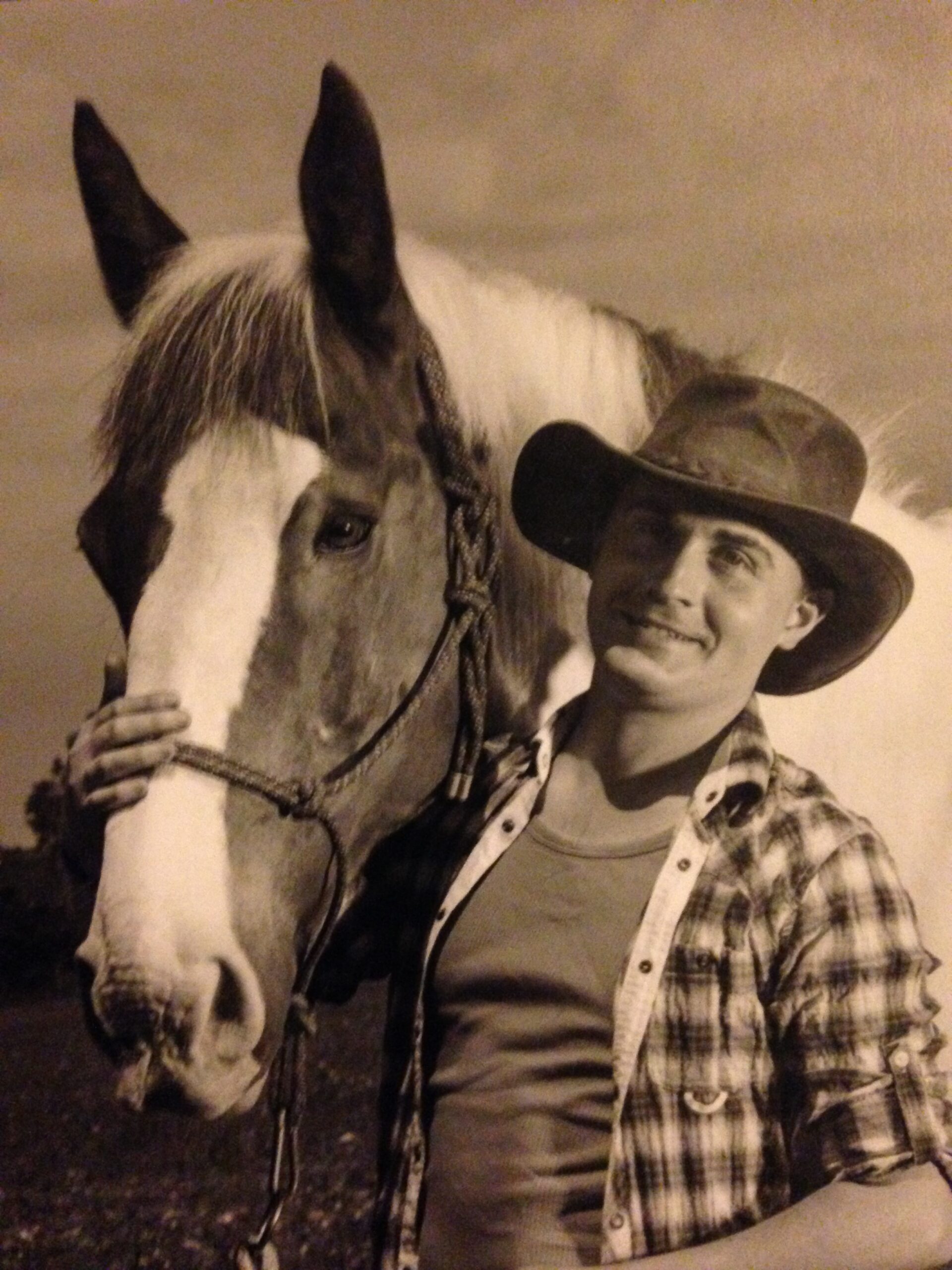
This is difficult to write, but in some way, I think it could be therapeutic. 4 weeks ago from me writing, I lost my horse, Shandy. He was 30 years old and had been in really very good health for almost his entire life.
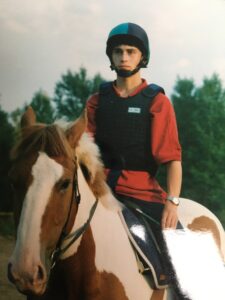
30 is a pretty good age for horses, and people often mentioned how he really didn’t look old; I, however, could see the age changes as I knew him inside and out. He had developed grey patches around his face (he was skewbald with a brown face), showed a few areas of age-related muscle loss (sarcopenia), took a little longer to loosen up when getting out into the field, and I felt he had a somewhat more mellow demeanour.
Shandy was loving his retirement. I had always told him that he would have a lovely retirement and live the life of luxury, and be a horse. Shandy had given me the most wonderful experiences, and we shared so many treasured memories; it wouldn’t be an exaggeration to say that Shandy shaped who I am today.
I have owned Shandy since he was three years old, so I was just a teenager when we got him. With the help of some great trainers, I trained him myself and built the strongest bond possible. When I then attended college to train in horse management, Shandy came with me, and we gained even more support and development. Staff and teachers at the college all fell in love with his calm and loving personality, as did all my student colleagues. These were, of course, really formative times in my life and discovering who I was, and Shandy “held my hand” throughout all of it.
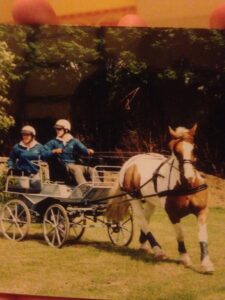
Together, Shandy and I tried many different sports and pursuits. He was a successful mount in Dressage, he could jump anything you faced him with, and was a dream to hack out alone or in company. Shandy even became a very capable driving horse, and we had many fun times as a family out in the lorry at driving events.
Shandy got featured in Carriage Driving Magazine, and we drove alongside Prince Philip, the Duke of Edinburgh, at Windsor Park training. Of course, it wasn’t the success in shows and events that was important; it was the fact that he offered everything, all of himself to anything I asked and did so with interest and joy. Shandy trusted me, and I trusted him.
I can’t overstate how much Shandy and I had formed a connection that was unbreakable. People would often be impressed when Shandy would perform activities that Natural Horsemanship trainers spend years training their horses. Playing at liberty and riding bareback and bridleless with total trust, and still performing all the same dressage movements and jumping with no tack. Our bond had created this ability through pure trust and love without having to even train it.
If I went on holiday, I would always be calling the people caring for him to see how he was, and the first thing I wanted to do when returning was to go see him. When I would leave the stables at the end of a day, I would go back to the stable door two or three times to either check he had everything he needed or just to cuddle him once more before driving home. I could go on writing about our life together, but it would end up being a book; needless to say, we were inseparable, and he felt part of me.
Later in Shandy’s life, he developed a few issues. He had begun to get arthritic changes in some joints, and as many older horses do, he developed dental issues that needed some more regular check-ups than the routine ones. These were not major problems but just the age-related changes one would expect.
However, as Shandy transitioned into retirement from riding and driving, I noticed some irritated skin patches, and some were not responding well to simple grooming and topical treatment. We had a number of biopsies taken and many blood tests, and our very attentive Vet diagnosed him with Pemphigus Folliculosis.
This is an autoimmune condition where the immune system attacks the extracellular matrix that supports the skin cells. It leads to very flaky skin and even sores, and the leaking of interstitial fluid through the skin and leaving the skin more open to infections. There can also be more systemic inflammation and immune attacks on other tissues.
He required some heavy steroids and immune inhibitors alongside antibiotics, but his body responded well, and with attentive skin care and grooming, the condition went into remission. I was so happy that his condition had improved, and we were no longer getting any flare-ups. He was happy and healthy again.
Around the time that Shandy turned 30 years old, I began to notice some reluctance to stand up and activate his hind legs. I put it down to the arthritic changes and even asked the Vet’s opinion, who agreed this was most likely. He was not showing signs of lameness or other changes.
There was a very slight progression in the lack of engagement, however, and I soon noticed that from time to time, he would struggle to make tight turns in a balanced way and had begun to brush his hind legs when walking faster or trotting in the field. Things really became a concern when I noticed that he had dropped his penis out of the sheath, and it had become swollen.
I thought perhaps it was a fly bite or insect sting, and the swelling meant that he couldn’t retract it properly. I called the vet, who said to try contrasting heat and cold and a gentle massage to drain the fluid and just to keep an eye on it. The following day however it had gotten bigger and we noticed he had not urinated much at all.
There were small amounts of urine coming out when he walked and moved. This meant there was urine staining on his back legs and subsequent skin irritation. I immediately called the Vet again who catheterised him, draining a huge amount of urine out with quite a lot of sediment in the urine. The relief on Shandy’s face was clear. The Vet said he would come again in the morning to see him again.
The following morning there had been some decrease in the swelling but he was still hanging the penis out. Over the next two days, the Vet came and drained the bladder and I continued with the after care in the hopes that the swelling would go down and he would go back to normal function. It simply worsened and he had also begun to lose coordination in his hind legs, all signs that this was a neurological lesion of some kind that was causing improper bladder control and loss of hind end function.
On the third day, the Vet came with another Vet colleague and a Veterinary student. They catheterised hoping to try using the scope for the second time as the first time was not clear. The urine that came out was full of blood. There was also mucous and mucosal lining coming out, this showed that there was significant deterioration of the bladder and had there been a haemorrhage, this condition would deteriorate very fast.
This coupled with a noticeable lack of hind end coordination in a 30 year old horse, there was only one option. I would never allow Shandy to suffer and the Vet said that the condition could become extremely serious within 48 hours.
We made arrangements for the euthanasia and I spent the last bit of time I had with Shandy cuddling and grooming him, giving him treats and telling him how wonderful he was. The Vets did an amazing and respectful job and Shandy passed on peacefully.
I had experienced losing small pets as a child (hamsters and alike) and even the loss of two family dogs, but this was different, I felt as though I had lost a part of me. Shandy was there with me for most of my life and I couldn’t picture what life looked like without him. There was some benefit to it all happening so fast and not being a long drawn out illness as it didn’t give me time to second guess anything or debate if I had done everything I could. However, the speed of his going from happy and apparently healthy horse to being put down also felt so sudden emotionally that it was like a gunshot.
The moment in the day when he was put down, I felt like something had been pulled out of my chest, a hole seemed to form and it was like a vacuum in my body. This void stopped me getting a full breath and I felt as though I was on the verge of complete panic. The one thing that I had held so tightly to for most of my life had gone and I realised how unsafe that felt.
As a lot of people with horses do, I had taken a lot of my self identity from having him. I was Chris the horse person…
I honestly felt that I didn’t actually know who I was without Shandy. I actually still don’t know as I write this but I guess that the journey. I couldn’t go back to the stables for a while as everytime I thought about it, I would feel sick with anxiety and sadness. I had to go in time to bring home his equipment and supplies. In the meantime I tried to go about day to day things but couldn’t shake the sense of despair and emptiness. I would have given anything to just touch him again, to smell his coat and hug his face.
Clearing out the storeroom and stable was one of the hardest things. I could almost feel him there beside me in the stable as I moved things around which was both a comfort and a source of pain. Everything still smelled like him and his hair was on all the equipment and grooming supplies.
People at the stables meant well when they would come and express their sadness and tell me that if I needed anything to “just ask”. However, the stream of pity and condolences actually made me feel worse and I would hide away from sight if I saw another owner turn up. Tasks like taking his name plate down from the stable door were filled with conflict. I would feel my hands doing the task while my heart was saying “no” as if this was somehow making it real and permanent.
The World Keeps Spinning
When we are in grief, it can feel as though we want the world to just stop for a while so we can gather our thoughts, or maybe just recede from the world and let it go on while we process. Some people will have other animals who rely on them and this can be a very good way of processing while maintaining some degree of routine.
The reality of course, is that no amount of “stopping” everyday things will bring them back, the need to process is however vital. Personally I have found since losing Shandy, that the best thing I could do was stick to a daily routine; everyone will be different though.
It is so important to remember that some people simply won’t understand the importance of our animals. Some people who do not have pets or have not been “animal people” won’t understand that our animals become part of our family and are no less loved than our human family.
Despite what some may think, it is completely normal to mourn the loss of your animal as much as the loss of a person in your life, we must not feel guilt over the time and input we need to recover. Of course “recover” is an odd word to use as it implies that at some point you become OK about it all.
I prefer to say we learn to accept or we move beyond sadness. I am finding more and more now that I am looking at photos of Shandy and smiling while I remember the happy memory associated with it; previously I had found it too painful to even look. This doesn’t mean I am “OK” about this, it means that I can see that the loss doesn’t take away the precious memories and time we had.
I think that keeping a routine for your days is a healthy approach to grief. This doesn’t need to be a routine that forces you into “normality” (whatever that is), it just means that you have a set of things to do or engage you that keeps your body moving and your mind in the present.
This could be as simple as making sure that you have a bite of breakfast everyday or do some dusting/cleaning. The routine takes you out of the inactivity and circling thoughts. Part of that routine can be journaling, this is a very effective way to articulate your thoughts and also allows you to evidence your levels of acceptance.
I advise also putting your nice memories in the journal as this will be therapeutic and useful in the longer term. Your routine can also include time to be sad and to cry or sleep or just switch off. It is just as important that your mind and body have rest time to heal, your physicality will also be affected by the emotions you feel (more on that soon).
During these rest periods, it is sometimes good to remain alone to give you the peace to just settle. However, it is also a really good idea to include time with friends or family. They should be people who understand you and will not judge or coerce you into doing what you are not ready to do.
Losing a loved one is very isolating and times can feel lonely, humans need other humans and having company to simply be present with you and show you support is deeply healing. Remember your “social battery” though, this energy and ability to be around others may feel depleted and you might need to warn those you surround yourself with that you may need to limit your time.
As within, so without – your body and mind
In Osteopathy, we know that the mind and body are not separate things but a continuum of phenomena that are expressions of the you in this world. Your grief can manifest in physical symptoms that may be minor or can be quite limiting. We must understand that emotions lead to chemical changes in the body. Our thoughts and emotions will alter the hormonal balance, blood chemistry, pain sensitivity, gastrointestinal function… the list goes on. Equally these symptoms can then become a stressor in and of themselves and exacerbate our mental state. Baring this mind, we can use the principles of Osteopathy to our advantage when dealing with the grief and sadness from losing our companions.
It may seem common sense to look after the body in times of stress. We almost instinctively want to pamper ourselves and indulge to comfort our disturbed feelings. This is a way of using the physical body as a tool to affect the mind.
The most effective methods will be those that stimulate the parasympathetic nervous system which calms the body and rests the mind. These methods could involve things like getting a massage, deep breathing exercises, Yoga or some mindful activities like painting or craft. Some people find aromatherapy useful in times of struggle but do remember that smell can stimulate memory very easily and may become overwhelming, it’s a good idea to speak with an aromatherapist when considering this intervention.
An Osteopath can provide general Osteopathic treatment that can be aimed at parasympathetic modulation. This shows the expanded scope of Osteopathic interventions beyond the simply musculoskeletal. Osteopaths can observe the physical expressions of the body that are manifestations of stress and emotions. Our body can show tensions, postural changes and subsequent discomfort that, when ameliorated, can bring a sense of calm and wellbeing that helps us cope mentally.
The Professional’s Feelings
It’s not uncommon for the professionals that help you with your animals to feel a sense of grief as well. Your Osteopath, Trainer, Vets or any other professional who spends considerable time and effort on your animals will undoubtedly form a bond with them albeit less deeply at times. Professionals try to maintain a distance emotionally to remain objective however we are only human and this can be difficult especially if that animal wants to form a bond too.
Of course, as an Osteopath, I try to maintain boundaries and I often explain to owners how my advice and discussions are based on evidence and the animal’s best interests. But it is important to remember that in dealing with owners (particularly when their animal is unwell) we must consider their emotions and part of the job is often “holding space” for them to explain their concerns and feelings. Never underestimate the effect of empathy leading to taking on other’s emotions, this can lead to burnout in professionals.
Due to the clear connection that professionals build with the animals in question, it can be nice to suggest meeting to talk about them after the animal has passed but only when you as an owner feel ready. This can really help in the grief process and I have found it particularly useful in both remembering Shandy and feeling gratefulness. Sharing your feelings with someone who knew the animal well can be truly cathartic. As a professional in this situation however, always reflect on your boundaries and ensure professionalism combined with empathy.
In Conclusion
The first thing I want to say to anyone out there dealing with the loss of a loved animal companion is that I’m very sorry for your loss. Remember that grief is a process and avoiding your feelings can actually make things feel worse. Take your time with everything and allow yourself to feel fully.
The time soon after a loved animal passes is not one in which to make rash decisions either, some people may feel pressured to move on or even have another animal. These decisions are ones only you can/should make. Try to remember routine in your day and write about your feelings so as not to internalise everything wearing out your battery.
There are always people and professionals to reach out to. Your doctors, counsellor, friends and family are the support that you should use and never feel that you need to suffer alone.
They are never truly gone, just waiting on the other side…
Blog Post written by:
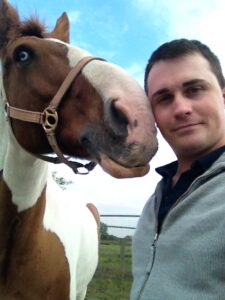
Chris Bates
Osteopath (DO), Equine Therapist and Lecturer at London College of Animal Osteopathy